25 Japanese Etiquette Rules Tourists Rarely Hear (But Locals Quietly Appreciate)
A warm, practical guide to the unspoken social rules of travelling in Japan — trains, temples, onsen, restaurants and city streets — with the reason behind each one, and reassurance that effort matters more than perfection.
Here is the reassuring truth first, because it matters more than anything below: Japan is one of the most forgiving places in the world to be a well-meaning visitor. Nobody expects you to know every custom, locals are far more likely to bow at you than to judge how you bow back, and small slips are met with warmth, not scorn. Japan’s own tourism body puts it plainly — visitors aren’t expected to have mastered the intricacies; sincerity and a little observation are what count.
So think of this guide not as a list of ways to get it wrong, but as a set of quiet cues that make travelling smoother — and that locals genuinely notice and appreciate. Almost none of these are laws. The handful that are (street-smoking bans, the plastic-bag charge) we flag clearly. The rest are social norms and simple courtesies, and underneath nearly all of them sits one idea worth learning early.
The one idea that unlocks all the others: meiwaku
If you remember one word, make it meiwaku (迷惑) — causing trouble or inconvenience to the people around you. Avoiding meiwaku is the master key to Japanese public life. Quiet trains, tidy queues, carrying your own rubbish, not eating on the move — they all flow from the same instinct to keep your footprint light in shared space. Get the spirit of that right and the specific rules mostly take care of themselves.
Its gentle twin is omoiyari (思いやり) — anticipating and caring about how others feel. And the small word you’ll use constantly is sumimasen (すみません), which stretches to cover “excuse me”, “sorry” and “thank you” all at once. Learn those three and you already understand Japanese etiquette better than most first-time visitors.
On the trains
Public transport is where visitors most often feel unsure, and where a few small habits go a long way. The overall tone on a Japanese train is calm and quiet — treat it a little like a library that moves.
Keep your phone on silent (locals call it “manner mode”) and take voice calls off the train entirely; quiet conversation is completely fine. On a crowded train, slip your backpack off and hold it by hand at your feet or place it on the overhead rack — it simply takes up less room and stops it knocking into people. Let passengers off before you board, line up at the painted door markings, and leave the middle of the doorway clear.
Priority seats (near the doors, usually marked) are for elderly passengers, pregnant travellers, people with disabilities and those carrying infants. You may absolutely sit in them when nobody needs them — just be ready to give the seat up straight away if someone does. And a couple of common worries you can let go of, because the official guidance actually changed.
| Situation | Common tourist habit | What locals do | Why |
|---|---|---|---|
| Phone | Take a quick call | Silent mode, no calls; texting is fine | A voice call fills a quiet shared space (meiwaku) |
| Backpack | Leave it on your back | Hold it by hand or put it on the rack when crowded | Frees standing room and stops it knocking seated riders |
| Boarding | Step on as doors open | Wait to the side, let people off first | Everyone flows faster and the train keeps to time |
| Priority seats | Avoid them entirely, or refuse to move | Use them if free; give them up the moment they’re needed | They’re shared, not reserved — the courtesy is the yielding |
| Eating | Snack on any train | Meals on the Shinkansen; not on commuter trains | Smells and spills bother others in a packed carriage |
Two train “rules” you can stop worrying about
First, the old warning to switch your phone completely off near priority seats is outdated. Kansai operators relaxed it in 2014 and the Tokyo-area operators in 2015; the current wording only asks you to turn it off near those seats when the train is crowded, and in practice most people no longer do even that. The firm part — no voice calls anywhere on the train — still holds.
Second, you do not need to fold your stroller on the train any more. Japan’s transport ministry and the operators now provide a pram-and-wheelchair priority space near the doors and actively ask other passengers to be understanding of stroller users. Folding is only a courtesy in an extreme rush-hour crush. Both of these are genuine, recent shifts — so if an older guidebook tells you otherwise, trust the current guidance.
Walking around cities
On busy pavements and in stations, the same light-footprint instinct applies. If you need to check a map or your phone, step to the side and out of the flow rather than stopping dead in the stream of people. Keep to one side on narrow streets, and don’t spread a group across the whole footpath.
Public bins are famously scarce — a legacy of security decisions decades ago — so carry your rubbish with you until you find one, often back at your hotel or by a convenience store. Cross at the lights even when the road looks empty; it’s a strong social habit and sets the tone for the children watching. And smoke only in the marked smoking areas: many city centres (Chiyoda and Shibuya in Tokyo among them) ban street smoking with on-the-spot fines — one of the few genuinely enforced rules here.
Eating while walking (aruki-tabemono) is mildly frowned upon as a general norm, and in some places it’s an explicit, posted request — Kyoto’s Nishiki Market asks visitors to eat in front of the shop rather than strolling the aisles. The friendly move is to enjoy street food standing by the stall where you bought it.
Escalators: the etiquette that’s actively changing
You’ll hear that Tokyo stands on the left and Osaka stands on the right, leaving the other side clear for walkers. That’s still what you’ll mostly see. But the official guidance has flipped: operators, airports and local governments now ask everyone to stand still on both sides and hold the handrail, because walking causes most escalator falls. Saitama (2021) and Nagoya (2023) even passed stand-still ordinances (no fines).
The practical takeaway for a visitor: stand, hold on, and don’t stress about which side — just don’t block someone who’s walking if you’re in a city where that’s still the habit. This is a norm in transition, so you’ll genuinely see both behaviours.
At restaurants
Eating out in Japan is relaxed and joyful, and the etiquette is mostly common sense. To call staff over, a friendly “sumimasen” is exactly right — many casual places and izakaya also have a call button on the table. You won’t be checked on constantly the way you might be elsewhere, so it’s normal to signal when you’re ready.
Say “itadakimasu” before eating and “gochisōsama” after if you like — it’s warmly received but genuinely not required. Slurping ramen, soba and udon is completely fine and even said to improve the flavour; it doesn’t extend to other foods. Pour drinks for others rather than yourself, wait for the “kanpai” before the first sip in a group, and use the little tray at the register for cash rather than handing it over. In most places you pay at the front counter, not the table.
Two chopstick habits are worth keeping because they carry real weight: never stand chopsticks upright in a bowl of rice, and never pass food from chopstick to chopstick. Both mirror Buddhist funeral rites, which is why they land differently from the milder don’ts. For everything else — resting chopsticks on the holder, not waving or pointing with them, using the serving chopsticks or the back ends for shared plates — a relaxed effort is plenty.
| Situation | Common tourist habit | What locals do | Why |
|---|---|---|---|
| Calling staff | Wait to be noticed, or wave broadly | A clear “sumimasen” or the table call button | Direct but polite; snapping or shouting disturbs others |
| Chopsticks in rice | Stand them upright to rest them | Lay them on the chopstick rest or bowl edge | Upright chopsticks in rice is a funeral offering |
| Sharing a dish | Use your own eating ends | Use serving chopsticks or the clean back ends | Simple shared-table hygiene |
| Soy sauce with sushi | Dip rice-side, add extra wasabi | Dip the fish lightly; trust the chef’s seasoning | Rice soaks up too much; wasabi is usually already added |
| Paying | Wait for the bill at the table | Carry the slip to the register; cash on the tray | It’s simply how most places are set up |
| Tipping | Leave a tip to say thanks | Say thank you — no tip | Great service is the baseline (omotenashi); tips confuse |
At convenience stores (konbini)
Convenience stores are a joy and a lifeline, and the etiquette is light. If there’s an eat-in corner, use it for anything you’ve just bought and had heated; otherwise take it somewhere to sit rather than eating as you walk out. Staff will happily microwave a bento — they’ll ask “atatamemasu ka?” and it’s free — and add chopsticks or a spoon.
At the register, put cash on the little tray, tap your IC card or card if you prefer, and note that since 2020 plastic bags carry a small charge, so you’ll be asked whether you want one. The bins are for what you bought there and are sorted into burnable, bottles and cans — a small act that keeps the whole system working.
At temples and shrines
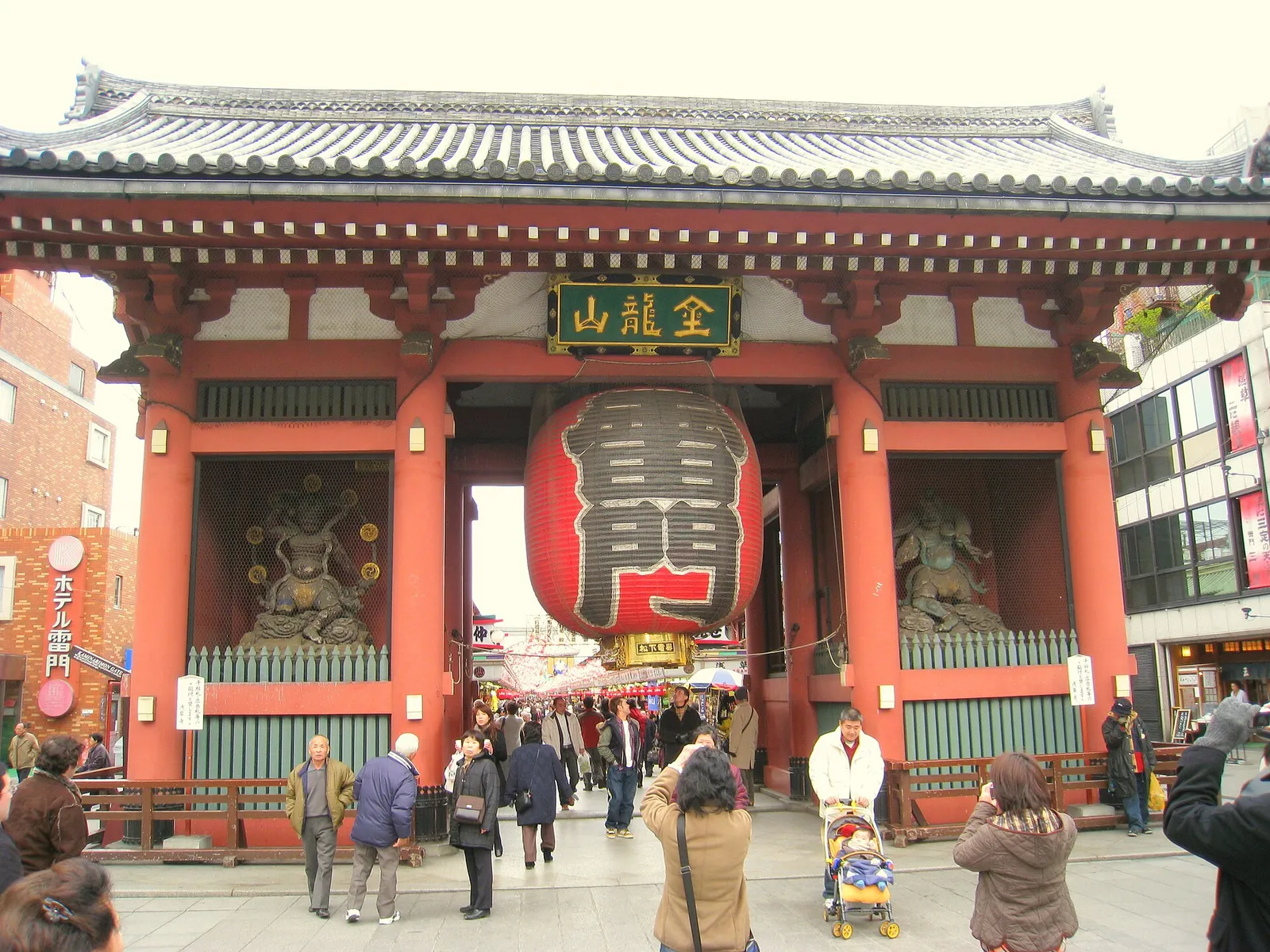
The single most useful distinction: a Shinto shrine (marked by a torii gate) is where you clap; a Buddhist temple (marked by a large gate and often incense) is where you don’t. Many famous sites sit side by side, so the etiquette can flip within a few metres — Tokyo’s Sensō-ji temple and the Asakusa Shrine next door are the classic example. Mixing them up is the friendliest possible mistake, so don’t worry about it.
At a shrine, the sequence is: bow lightly at the torii and walk a little to the side of the central path (kept for the deity), rinse your hands at the water basin if there’s a ladle — where the ladle has been removed, just rinse under the running water — then at the offering hall: bow twice, clap twice, make your wish, bow once more. At a temple, place your palms together quietly and bow, without clapping. If there’s an incense burner, waft a little smoke over yourself.
Keep voices low, follow the no-photography signs inside halls and around altars, take hats off when you pray, and step over (not on) the raised wooden thresholds. Grounds are usually relaxed and family-friendly; the quiet bar rises at the offering hall and inside buildings.
| At the offering hall | Shinto shrine (torii gate) | Buddhist temple |
|---|---|---|
| Do you clap? | Yes — two claps | No — palms together quietly |
| Sequence | Bow twice, clap twice, wish, bow once | Coin, hands together, bow |
| The path | Walk to the side; centre is the deity’s | Keep to the side; step over thresholds |
| Incense | Not usually | Waft the smoke over yourself if present |
At hotels, ryokan and onsen
A traditional inn (ryokan) runs on a clean-inside / dirty-outside logic. Take your outdoor shoes off at the genkan step by the entrance and wear the provided slippers in the corridors — but never on the tatami mats, where it’s socks or bare feet. The classic slip-up is the toilet: there are separate toilet slippers just inside the door; step into them there and back out of them when you leave (walking into the room still wearing them is the giveaway). If there’s a yukata robe, wrap the left side over the right — the reverse is used only to dress the deceased, so this one’s worth getting right.
The onsen (hot spring) has one rule that really matters and the rest is comfort: wash and rinse your whole body thoroughly at the seated showers before you get into the communal bath. No swimwear, keep the small towel out of the water (rest it on your head or the side), tie up long hair, and keep it calm — no swimming or splashing.
Tattoos are the common worry, and the honest picture is that policies vary by facility: some are fully tattoo-friendly, some allow a small tattoo if you cover it with a skin-tone sticker, and some still say no. The stress-free routes are a private or family bath (kashikiri), a room with its own onsen, a cover sticker, or simply phoning ahead. Tattoos are perfectly legal in Japan — this is about individual bath policies, not the law.
| Step | What to do | Why |
|---|---|---|
| Before the bath | Wash and rinse fully at the showers | The shared water must stay clean for everyone |
| Swimwear | None — you bathe bare | It’s the universal custom in Japanese baths |
| The small towel | Keep it out of the water | Hygiene; fold it on your head or set it aside |
| In the bath | Soak calmly — no swimming or splashing | Onsen are quiet, restful spaces |
| Tattoos | Check the policy; cover, book private, or ask ahead | Policies are per-facility, not a national rule |
Travelling with children: what’s really expected
This is the reassuring part, and it deserves its own section because so many parents arrive anxious. Children are genuinely welcome in Japan. Family restaurants have high chairs and kids’ menus, conveyor-belt sushi is a hit with all ages, department stores have superb baby rooms, and you’ll see Japanese families everywhere doing exactly what you’re doing.
The one place the volume dial matters is the train, and even there the expectation is effort, not perfection. Japanese people understand that toddlers melt down; what they quietly appreciate is a parent who’s trying to manage it — a cuddle, a quiet distraction, a book — rather than ignoring it. Strollers are welcome (no need to fold on trains), most big stations have lifts, and shrine and temple grounds are usually relaxed enough for little legs to move.
If it helps, hold this thought: your job isn’t to raise silent children for two weeks. It’s to show consideration where you can, and Japan meets that halfway with genuine kindness toward families.
Are you ready for Japan?
Rather than memorising all twenty-five, use this quick checklist. Tick the parts of your trip that apply and it will pull out just the etiquette points that matter for you — a short, calm briefing instead of a wall of dos and don’ts.
Interactive
Are you ready for Japan?
Tick what your trip involves and we’ll pull out the few etiquette points that actually matter for you — no more, no less.
Pick one or more above to see your personalised checklist.
Things tourists worry about (but really don’t need to)
Let’s clear away the anxieties that put people off, because most of them simply aren’t true.
“I’ll offend everyone if I bow wrong.” You won’t. Visitors are more likely to be bowed at than expected to bow; a small nod, or a bow with a spoken “arigatō”, is plenty, and a handshake is well understood.
“I must speak Japanese.” You don’t. Transport signage is extensively in English, translation apps handle menus and signs, and people are patient and helpful. A few polite words go a long way, but fluency isn’t needed.
“I’ll be scolded for small mistakes.” Very unlikely. Minor slips are forgiven and often gently laughed off. The advice locals themselves give is simple: observe, be polite, and apologise lightly if needed.
“I can’t travel with loud children.” You can. Kids are welcome across Japan; common-sense train volume aside, families are not a problem — they’re everywhere.
“I must know every custom before I arrive.” No one expects that — not even close. Watching what people around you do, and following along, is a completely valid strategy and exactly what’s expected of a considerate visitor.
The short version
- Learn one word — meiwaku — and let “don’t put my trouble onto others” guide you.
- Trains: silent phone, no calls, backpack down when crowded, let people off first.
- Streets: step aside to check maps, carry your rubbish, cross at the lights, smoke only in marked areas.
- Restaurants: “sumimasen” to call staff, slurp your ramen, don’t stand chopsticks in rice, don’t tip.
- Temples vs shrines: clap only at shrines (torii gate); quiet palms at temples.
- Onsen: wash thoroughly before you get in; check tattoo policy or book a private bath.
- With kids: you’re welcome — show effort on the trains, and everything else is warmly forgiven.
Turn this into your itinerary
The planner builds a personalised, day-by-day version around your family.
Start planning →Common questions
- What are the most important etiquette rules in Japan?
- If you internalise one idea — meiwaku, not causing trouble to others — the rest follows. Concretely: keep phones silent and quiet on trains, don’t stand chopsticks upright in rice, wash thoroughly before entering an onsen, clap only at Shinto shrines (not Buddhist temples), and don’t tip. None are laws; they’re courtesies locals appreciate.
- Is it rude to eat while walking in Japan?
- It’s mildly frowned upon as a general norm rather than a rule, and in a few places (like Kyoto’s Nishiki Market) it’s an explicit posted request. The easy, polite move is to eat street food standing by the stall where you bought it, then move on.
- Should tourists bow in Japan?
- A small bow or nod is a lovely gesture but genuinely not required — visitors are more likely to be bowed at than expected to bow. A nod with a spoken “arigatō”, or a handshake, works perfectly. Don’t stress about angles or depth.
- Can children be noisy on Japanese trains?
- Trains are quiet spaces, but the expectation is effort, not silence. Japanese passengers understand that toddlers melt down; what’s appreciated is a parent calmly managing it rather than ignoring it. Children are genuinely welcome across Japan.
- Is tipping rude in Japan?
- Tipping isn’t customary and can cause polite confusion — staff may even chase you to return the money. Excellent service is the baseline (a value called omotenashi). Say thank you instead. Upscale places may add a service charge to the bill.
- What should I say when entering a shop or restaurant?
- You don’t need to say anything — staff will greet you with “irasshaimase”, and a nod or smile is enough. To call staff over, a friendly “sumimasen” (excuse me) is exactly right.
- Do I clap at temples and shrines?
- Clap only at Shinto shrines (marked by a torii gate): bow twice, clap twice, make your wish, bow once. At Buddhist temples, place your palms together quietly and bow — no clapping. Many sites sit side by side, so it’s an easy and forgivable mix-up.
- Can I go to an onsen if I have a tattoo?
- Often yes, but policies vary by facility — some are tattoo-friendly, some allow a small covered tattoo with a sticker, and some don’t permit them. The simplest routes are a private/family bath (kashikiri), a cover sticker, or calling ahead. Tattoos are legal in Japan; this is about individual bath rules.
- What happens if I accidentally break etiquette?
- Almost nothing. Minor slips are readily forgiven and often gently laughed off. A quick “sumimasen” smooths over any awkward moment, and locals value the effort far more than flawless execution.
- Do Japanese people expect tourists to know all the rules?
- No — explicitly not. Japan’s tourism guidance says visitors aren’t expected to have mastered the intricacies. Observing what people around you do and following along is exactly the right approach.
Related guides
Keep reading
Japan etiquette for families: the essentials, simply explained
The handful of Japanese etiquette basics that actually matter for families — trains, shoes, eating, rubbish and temples — and how to teach them to kids without stress.
5 min readTemple and shrine etiquette with children in Japan
How to visit Japanese temples and shrines respectfully with kids — the difference between the two, the purification and prayer steps, photo rules, and keeping children engaged.
4 min readOnsen etiquette for children, explained simply
The simple onsen etiquette rules to teach kids before their first Japanese hot-spring bath — washing first, towels, quiet and calm, so everyone relaxes.
5 min readTrain etiquette with kids in Japan
How to ride Japanese trains politely with children — noise and phones, priority seats, prams, queueing, and where eating is and isn’t okay.