Kids’ menus and portions in Japan
What to expect from children’s menus and portion sizes in Japan — where to find okosama plates, sharing strategies, and ordering for little appetites.
Japan is well set up for children’s appetites, especially at family restaurants and casual chains. Knowing the word for a kids’ meal and a few sharing tricks keeps everyone fed without waste.
The okosama plate
Many family restaurants offer an “okosama” (children’s) plate — a fun combination of small portions like rice, a little curry or hamburg steak, corn and a drink, often on a themed plate. Look or ask for “okosama menu”.
Where kids’ menus appear
- Family restaurants and casual chains almost always have them.
- Theme parks, department-store restaurants and food courts usually cater for children.
- Small traditional or specialist restaurants may not — sharing works well there.
Sharing and portions
Adult portions are moderate, and sharing is common and accepted at casual places. Ordering a couple of dishes to share, plus rice, suits younger children better than a plate each. Ask for an extra small bowl or plate — “o-sara” — to divide food.
Chains kids reliably love
- Conveyor-belt sushi (Sushiro, Kura, Hama Sushi) — cheap, fun, tablet-ordered, with plenty of non-fish plates (egg, corn, chicken, fries, udon, dessert).
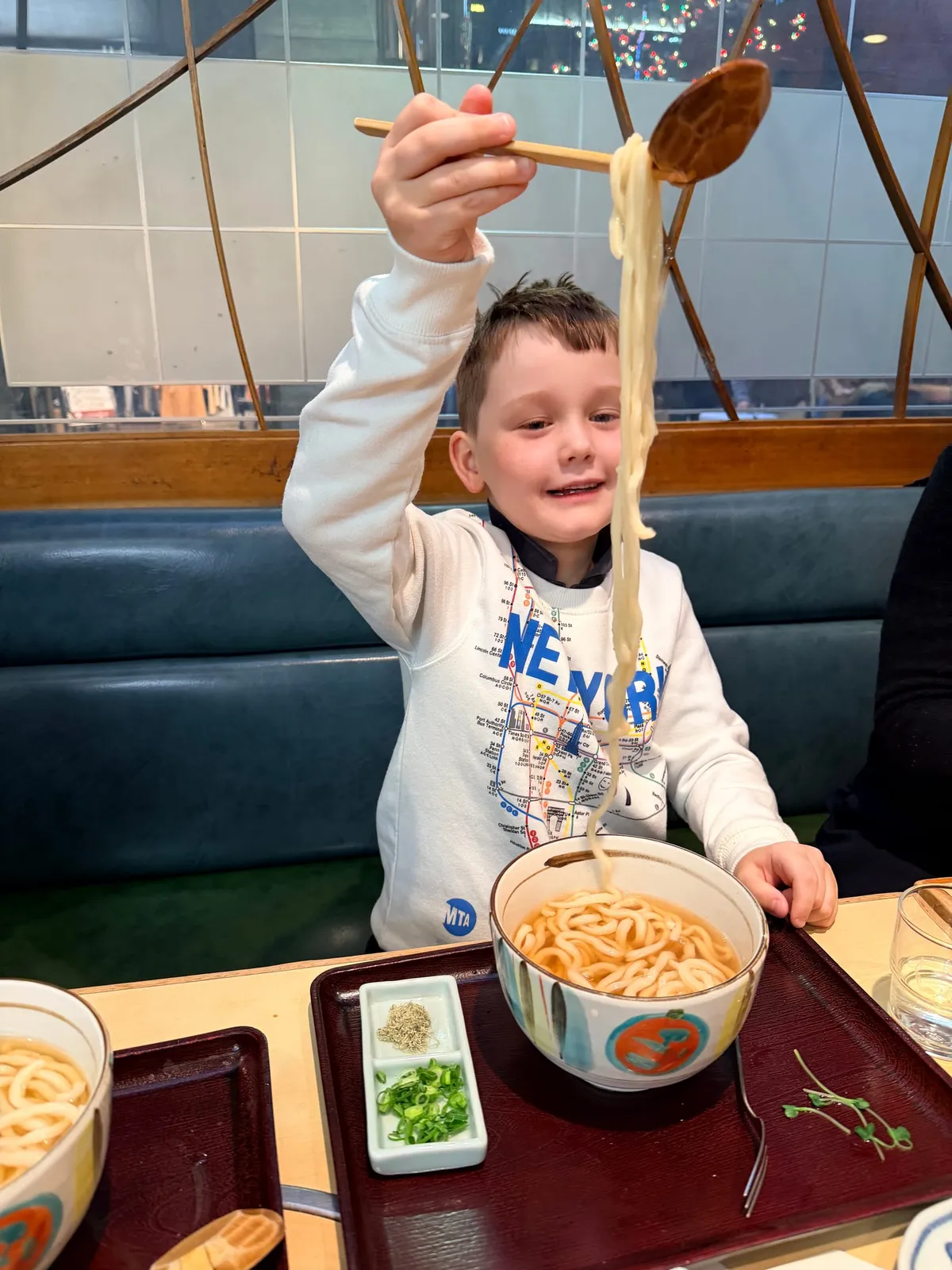
- Udon and ramen chains (Marugame Seimen, Hanamaru) — quick, mild, cheap noodles most kids will eat.
- CoCo Ichibanya curry — choose the spice level (level 0/mild) and portion size, so even cautious eaters can have familiar-tasting curry and rice.
- Family restaurants (Saizeriya for cheap pasta/pizza; Gusto/Jonathan’s) — picture menus, drink bars and okosama plates.
High chairs, cutlery and comfort
Family restaurants and casual chains typically have high chairs, child cutlery and sometimes booster seats — just ask. Many also have non-smoking family sections and spacious booths that fit a pram alongside.
Handy phrases
Try “okosama menu wa arimasu ka?” (Do you have a children’s menu?), “o-sara o kudasai” (a plate, please) for sharing, and “kodomo-you no isu wa arimasu ka?” (Do you have a high chair?). Staff are helpful and used to families.
Book ahead for this trip
Optional, relevant experiences you can pre-book on Klook. We may earn a commission — it never changes what we recommend.
Some links are affiliate links. If you book through them we may earn a commission at no extra cost to you — it never changes what we recommend.
Turn this into your itinerary
The planner builds a personalised, day-by-day version around your family.
Start planning →Common questions
- Do Japanese restaurants have kids’ menus?
- Family restaurants, casual chains, theme parks and department-store dining usually do — often an “okosama” children’s plate. Smaller traditional restaurants may not, but sharing is easy and accepted.
- Are portions big enough to share with kids?
- Adult portions are moderate, and sharing is common at casual places. Order a couple of dishes plus rice and ask for an extra small plate (“o-sara”) to divide it.
- Which chains are easiest with fussy eaters?
- Conveyor-belt sushi (lots of non-fish plates), udon chains like Marugame Seimen, CoCo Ichibanya curry (choose a mild spice level) and Saizeriya (cheap pasta and pizza) are all reliable, cheap and kid-friendly.
Keep reading
Family restaurant chains in Japan: an easy win with kids
How Japan’s “family restaurants” take the stress out of eating out with children — picture menus, kids’ meals, drink bars and high chairs, and the chains to look for.
6 min readFood in Japan for fussy eaters: how to keep everyone fed
Practical ways to feed fussy eaters in Japan — the reliable safe foods, convenience-store wins, family restaurants and gentle ways to be a bit more adventurous.
5 min readConvenience store meals kids will actually eat in Japan
A parent’s guide to Japanese convenience stores (konbini) — the reliable kid-friendly foods to grab for breakfast, lunch and backup dinners, and how to read allergy labels.
6 min readManaging food allergies in Japan with kids (with Japanese phrases)
How to manage a child’s food allergy in Japan — the common allergens, an allergy card and phrases in Japanese, reading labels, dining out and carrying medication.